Why Many Believe Online Marketing Doesn’t Work
Many people today are convinced that online marketing does not work. They complain about the rising costs of ads on Facebook, YouTube, and TikTok. They point to wasted ad budgets and campaigns that fail to bring the results they expected. The truth, however, is not that marketing itself is broken. The real issue is that most entrepreneurs don’t understand the deeper concept of cash flow in online marketing.
If you view advertising as just a cost instead of an investment, then yes, it feels like a losing game. But if you learn to structure your business like the giants — Amazon, Facebook, Apple, and Google — you’ll realize that ad costs are minor compared to the recurring revenue they create. The real key isn’t just running ads, it’s building a cash flow engine that funds growth.
Read: Beginner’s Guide on How Marketing Works on All Platforms
The Reality of Digital Advertising Costs
Let’s face it, running ads can feel expensive.
-
Facebook ads: Costs are increasing as competition rises.
-
YouTube ads: Premium placement requires bigger budgets.
-
TikTok ads: Once cheap, now scaling with global demand.
But here’s the point most entrepreneurs miss: ads have always been expensive. Even in traditional media — TV, radio, or print — companies invested heavily to reach audiences. The difference today is that digital ads are measurable. You can track performance, calculate ROI, and optimize campaigns.
If you know how to monetize your audience, advertising costs are irrelevant. The problem is not the price of ads. The problem is a weak cash flow strategy.
What Successful Companies Understand About Marketing
Think about the biggest companies in the world:
-
Microsoft
-
Amazon
-
Google
-
Facebook
-
Apple
Despite being in different industries, they all share one powerful principle: recurring cash flow. They don’t depend only on one-time sales. Instead, they build systems where customers pay repeatedly, month after month.
This is not a coincidence. It is the foundation of their marketing strategy. Ads don’t scare them, because every new customer is not just a one-time transaction. Each customer represents lifetime value that fuels long-term success.
Read: Harvard Business Review on Subscription Business Models
The Power of Cash Flow in Online Marketing
Many businesses confuse revenue with cash flow. Revenue is what you earn when a customer pays you once. Cash flow, on the other hand, is the ongoing stream of money that keeps your business alive.
For example, you could sell a product for $500 and feel accomplished. But what if that customer never returns? Compare that to a subscription model where the same customer pays $50 every month. Over a year, that customer is worth $600 — and if they stay for three years, that’s $1,800 from just one person.
That’s the real power of cash flow in online marketing. It transforms unpredictable sales into predictable growth.
Subscription Models – The Secret Weapon
Subscription models are everywhere today:
-
Netflix gives you entertainment for a monthly fee.
-
Spotify gives you unlimited music.
-
Adobe moved from one-time software sales to Creative Cloud subscriptions.
Why? Because recurring revenue is more powerful than one-time payments. It creates financial stability. It allows companies to reinvest in ads, research, and innovation without fear of running dry.
Subscriptions also lower the barrier for customers. Instead of paying a huge sum upfront, they pay smaller amounts over time — making it easier to say “yes.”
Facebook’s Subscription Playbook
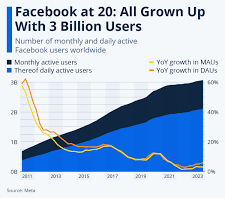
Let’s take Facebook as an example. For years, it earned money mostly from advertising. But recently, Facebook introduced Meta Verified (the blue check) as a subscription model.
At first, it was just $14 per month. Then they added packages with extra perks. Suddenly, what seemed like a small addition turned into a massive recurring revenue stream.
Now imagine: Facebook has 3.2 billion users. If only 1% of them subscribe at $14 per month, that’s $448 million every month — over $5 billion annually from just 1% of their users.
That is the magic of subscription-driven positive cash flow.
Breaking Down the Math of Recurring Revenue
Let’s make this simple.
-
Users on Facebook: 3.2 billion
-
If just 1% pay: 32 million
-
Monthly fee: $14
-
Monthly revenue: $448 million
-
Yearly revenue: Over $5 billion
And remember, that’s only 1% of their audience. In reality, subscription adoption often grows far beyond that. This predictable cash flow gives Facebook the confidence to spend heavily on ads, research, and product expansion.
Related: Why Businesses Without Automation, Zero Logistics & Recurring Revenue Fail Fast.
Why Positive Cash Flow Keeps Companies Alive
Many startups fail because they chase revenue instead of cash flow. They make sales but cannot sustain operations because money comes in irregularly.
Positive cash flow ensures:
-
Salaries can be paid consistently.
-
Ads can be reinvested immediately.
-
Growth doesn’t stall due to cash shortages.
That’s why the subscription economy is growing so fast. Companies realize that without recurring income, they are vulnerable to economic downturns and competition.
How You Can Apply Subscription Models to Your Business
You might think, “That works for Facebook or Netflix, but what about me?” The truth is, almost any business can benefit from a subscription model.
-
Coaches & Consultants: Offer monthly group programs or memberships.
-
Digital Marketers: Provide ongoing services like SEO, ads management, or content.
-
E-commerce Stores: Launch subscription boxes for regular product delivery.
The key is to identify something your audience needs repeatedly and package it into a subscription.
The Future of Online Marketing and Cash Flow
The future is moving toward micro-subscriptions, AI-driven memberships, and exclusive digital communities. Customers will expect tailored services for small monthly fees, and businesses that adapt will dominate.
Those who resist will keep complaining about ads being “too expensive.”
Frequently Asked Questions (FAQs)
Why is cash flow more important than profit?
Profit looks good on paper, but cash flow keeps the business alive. Without steady money, businesses collapse.
How much should I invest in ads?
Spend as much as you can profitably reinvest. If your customer lifetime value is higher than acquisition costs, scale your ads.
Can small businesses really use subscriptions?
Yes. From fitness trainers to online courses, subscriptions work at every level.
What is a good retention rate?
Aim for at least 70% after the first year. Strong retention drives exponential growth.
How do I set up recurring billing?
Use tools like Stripe, PayPal Subscriptions, or specialized membership platforms.
What industries benefit most?
Education, entertainment, SaaS, fitness, and e-commerce are leading the way.
Building Lasting Success With Cash Flow
The real reason online marketing fails for many is not because ads are too expensive. It’s because they don’t understand cash flow in online marketing. Big companies like Facebook, Netflix, and Amazon know the secret: subscription models create predictable revenue that powers long-term growth.
If you want to thrive, stop fearing ad costs. Instead, build a system where every new customer is not just a sale, but a subscriber who fuels your cash flow month after month. That’s how lasting success is built.