True Freedom in Life: The Eye-Opening Truth About Taking Back Control
When people talk about “freedom,” the conversation almost always circles back to money. The phrase financial freedom is thrown around in books, podcasts, and motivational speeches like it’s the ultimate goal. While there’s no denying that having enough money to cover your expenses without worrying about your next paycheck is life-changing, it’s only one part of the equation.
True freedom in life goes beyond money. It’s about regaining control of your time, your decisions, and your happiness. You could have millions in the bank and still feel trapped—by obligations, by a schedule you didn’t choose, or by people who have influence over your life.
The transcript we’re expanding on makes an important point: if you’ve sold your freedom to an employer, even for a high hourly rate, you’ve traded your autonomy for security. And while security has its place, it often comes at the cost of choice. This article will show you what wholeness freedom really is, why it’s worth fighting for, and how to reclaim it.

What “Wholeness Freedom” Really Means
Wholeness freedom is the ability to live without unnecessary constraints—financial, emotional, or societal—that dictate what you can and cannot do. It’s not simply about having the resources to make a choice but having the independence to make that choice without fear or dependence on others.
It’s the freedom to work if you want to, not because you have to. The freedom to wake up without an alarm clock, to travel without asking for permission, and to spend your time in ways that fulfill you.
Freedom as the Ability to Choose
Choice is the core of true freedom in life. Whether that choice is about where you live, who you spend time with, or what you dedicate your energy to, the power to decide is liberating. But when those choices are determined by someone else—like an employer, client, or even family obligation—you’re living on borrowed autonomy.
Financial independence is a stepping stone, not the destination. It removes money as a limiting factor, but without life independence, you can still be bound by commitments that limit your time and energy.
The Illusion of Freedom in Employment
At its core, a traditional job is an exchange—your time for someone else’s money. Whether you make $10 an hour or $100, the fact remains: someone else is in charge of your schedule, your workload, and sometimes even your future.
It doesn’t matter how much that hour is worth—when you sell your time, you give away the one resource you can’t replenish. You can always earn more money, but you can never get back the hours you trade away.
Steady paychecks, benefits, and stability are attractive. But for many, that security is a gilded cage. You feel safe, but you’re also bound by rules, policies, and limits that you didn’t create.
The Real Price of Freedom
Freedom isn’t free. Whether in history or business, it has always come at a cost. In entrepreneurship, that cost might be sleepless nights, uncertain months, or moments of doubt. But for those committed to reclaiming their time, it’s a price worth paying.
Why It’s Worth the Struggle
Working hard for your freedom might seem contradictory—after all, isn’t freedom about ease? The truth is, the effort you put in upfront buys you a future where your choices are your own.
Historical Examples of Freedom Fought For
From independence movements to civil rights struggles, history shows us that freedom is rarely handed out. It’s claimed, often through persistence, courage, and vision
How to Transition from Employment to True Freedom
Step-by-Step Approach
Assess Your Finances – Understand your expenses and create a plan to cover them without your job.
Identify Your Skills – Find what you can monetize on your own.
Start Small – Launch a side hustle before quitting.
Test the Market – Validate your business idea with real customers.
Plan Your Exit – Leave on your terms, with a financial cushion.
Building a Safety Net
Aim for at least six months of living expenses saved before you take the leap. Freedom feels better when it’s not accompanied by panic.
Starting a Side Hustle Before Quitting
A side hustle lets you test your business idea without the risk of losing your main income source.
Mindset Changes You Must Embrace
- Thinking Like a Creator, Not a Worker
Workers trade effort for a paycheck, while creators build value that exists beyond their direct involvement. To achieve true freedom in life, you must transition into the mindset of creating systems, products, or services that work for you even when you are not physically working.
- Learning to Make Hard Decisions
Freedom comes with decision-making power, and that power can feel heavy. You will have to say no to lucrative opportunities if they don’t align with your vision. You will have to choose between comfort today and greater rewards tomorrow. Decision-making is a skill you must master.
- Resisting the Lure of Easy Comfort
Once you start making money on your own terms, it’s tempting to relax too soon. But comfort is the enemy of growth. Freedom is maintained by constant learning, improving, and staying alert to changes in the market and your own life goals.
Regaining Freedom Through Entrepreneurship
Starting your own business puts you back in control. You choose when you work, how much you work, and who you work with. This doesn’t mean you’ll work less—especially in the beginning—but it means the time you invest is building your future, not someone else’s.
When you’re in charge, you decide which projects align with your values. You can turn down work that doesn’t excite you and focus on the work that moves you toward your goals.
There’s a deep satisfaction that comes from knowing you’re steering the ship. Every decision, win, and setback is yours—and that ownership is part of what makes true freedom in life so rewarding.
Financial Freedom vs. Life Freedom
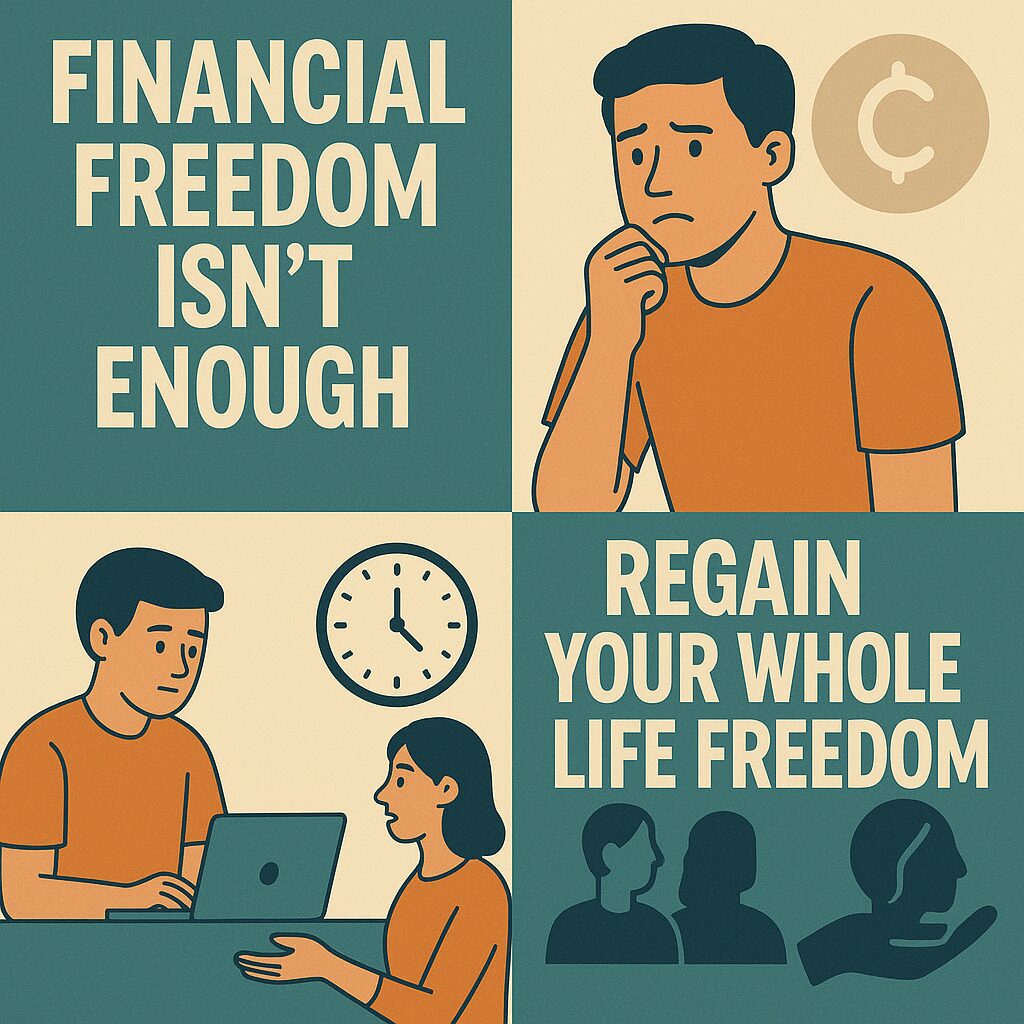
Financial freedom removes money as a source of stress, while life freedom removes the structural and emotional limitations that keep you from living on your own terms. Both are connected, but they are not the same.
You can have the money to retire early but still feel trapped in commitments that don’t bring joy. True freedom in life means you control not only your finances but your time and decisions.
Consider a high-earning executive who works 70 hours a week. They have financial security but no time to enjoy it. Contrast this with a small business owner who earns less but has full control of their schedule.
Common Traps That Steal Freedom Back
- Overcommitting Your Schedule
Even when self-employed, you can overload yourself with projects, meetings, and obligations. Remember, being busy is not the same as being free.
- Becoming a Slave to Your Own Business
Freedom can vanish if your business depends on you working non-stop. Build systems and delegate tasks to avoid becoming your own worst boss.
- Forgetting Why You Started
It’s easy to get caught up in growth, chasing bigger numbers and expanding endlessly. Don’t lose sight of the original reason you wanted freedom in the first place.
Building Freedom That Lasts
- Creating Passive Income Streams
Passive income—through investments, royalties, online products, or real estate—creates stability and reduces your dependence on active work.
- Automating Tasks
Use technology to automate repetitive work like invoicing, email marketing, and customer onboarding. Automation frees up time for more meaningful activities.
- Delegating Effectively
Hire skilled people to handle parts of your business. This allows you to focus on big-picture decisions while others manage daily operations
True freedom in life is about more than money. It’s about the ability to choose how you spend your days, who you spend them with, and what you dedicate your energy to. It’s a commitment to living intentionally, guarding your autonomy, and never trading your time for something that doesn’t align with your values.
Financial independence can set the stage, but wholeness freedom—the kind where you own your time, choices, and happiness—comes from courage, sacrifice, and conscious decision-making.
Once you taste true freedom in life, you’ll never want to give it up. And the best part? The power to claim it has always been yours.
Frequently Asked Questions
What is the difference between financial freedom and true freedom in life?
Financial freedom removes money as a limitation, but true freedom also removes time and choice limitations, giving you control over every aspect of your life.
How can I start working toward true freedom while still employed?
Begin by saving aggressively, reducing expenses, and starting a side hustle to test your business ideas.
Is entrepreneurship the only path to true freedom in life?
No, but it’s one of the most effective because it allows you to control your work environment, schedule, and income.
How much money do I need to achieve true freedom?
It depends on your lifestyle. Focus on creating sustainable income streams rather than a specific number.
What’s the biggest challenge after gaining freedom?
Maintaining it. Without boundaries and intentional choices, you can easily slip back into a lifestyle that feels restrictive.
How long does it take to transition to full freedom?
It varies widely. Some achieve it in a few years, others in a decade. Consistent action and smart planning speed up the process.